
Floral Packaging for Bouquets: Wraps, Bags and Boxes Compared
When you order floral packaging in bulk, start with the flowers and gift styles you need to offer. Wraps let you adjust the shape around a bouquet. Bags make it easier to carry, while boxes give the gift a set shape. Choose the pieces you need together, then compare the total cost of buying, shipping and using them.
Use this guide to narrow your choices and avoid ordering pieces that do not fit together. You can also use the same size, material and packing requirements to compare supplier quotes fairly.
Compare wraps, bags and boxes at a glance
Format | Choose it when | What to check |
Wraps | Your customers use varied bouquet shapes. | Check the size, folds and time needed to wrap. |
Flower bags | You want a consistent look and an easy way to carry the gift. | Try the bag with the bouquet fully wrapped. |
Flower boxes | You want a boxed gift that keeps its shape. | Include inner parts, shipping space and storage. |
If you offer several bouquet styles, try a few wrap options and bag sizes with the designs you expect to sell most. Once the fit works, add colours or finishes. You can offer more choice without buying a different container for every design. Use past orders or confirmed launch plans to decide how many sizes and colours to stock.
If you want a consistent look across a gift collection, decide how the finished bagged or boxed flowers should look, then choose the pieces that go inside. Try the whole combination before ordering in volume. A cheaper box may cost more to use if you later need an extra insert, more packing time or a larger delivery carton.
Choose a wrap that looks right and is easy to use
Paper and kraft for a solid background
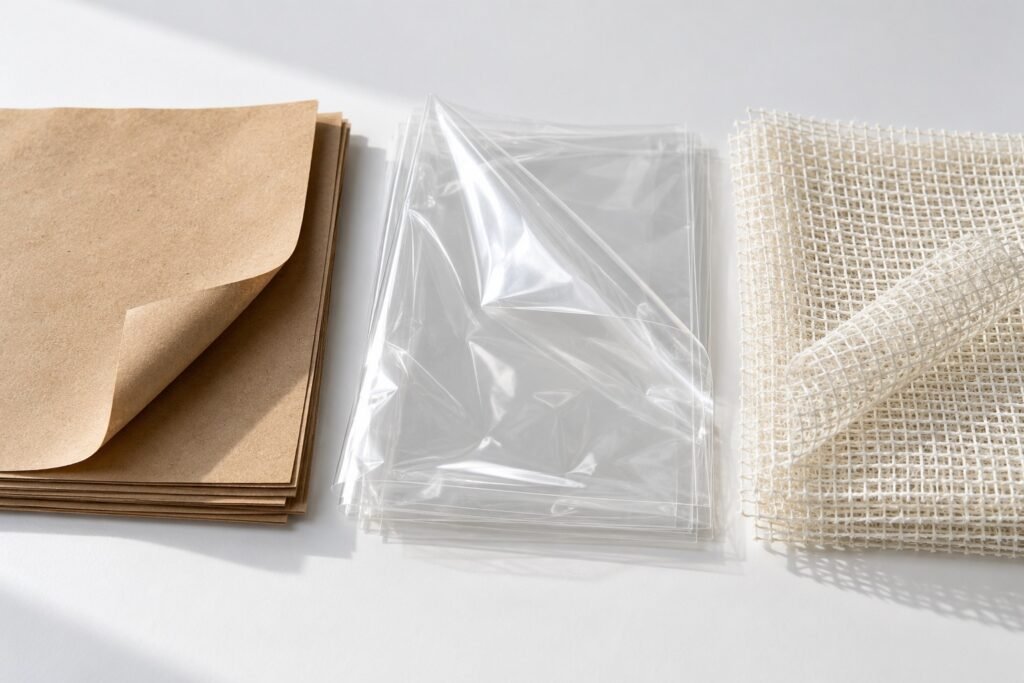
Choose opaque paper when you want a solid colour behind the flowers or need to hide ties and lower stems. Compare samples of the same size and material specification. Fold them, check the printed finish and see how well they hold their shape. Similar colours in a photo do not mean two papers feel or fold the same way.
If the bouquet travels with water around the stem ends, choose a separate bag or container to keep that water away from the outer paper. Untreated paper should not sit against wet stems. Try coated paper with the inner layer you plan to use as well, so you can spot water marks or softening before placing a large order.
Clear or frosted film for the look you want
Choose clear film if you want more of the stems and wrapping layers to show. Frosted film gives a softer, less transparent look. Check the material as well as the thickness, size and finish. In flower packaging, suppliers sometimes use “cello” or “cellophane” for different films. BOPP is a type of polypropylene plastic; genuine cellophane is made from cellulose, a plant-based material. Ask the supplier to write the actual material on the quote and order. This helps you avoid substitutes that look similar but need different handling or recycling instructions.
Add mesh or nonwoven wrap for texture
Add mesh or nonwoven wrap when the texture makes a clear difference to the design. For example, a mesh edge can show through over a plain wrap. Before making it part of every pack, check whether your customers want that finish enough to cover the extra material and work. Keep it optional if demand is unclear. Open mesh will not hold water, and you should check the material and intended use of any nonwoven wrap.
Choose a flower bag for easier carrying

Choose a handled bag when easier carrying is part of the gift you want to offer. Try it with the fully wrapped bouquet and any water container, not just the bare stems. Check that the opening and base are wide enough and that the handles remain easy to hold. A bag that is too small can mean repacking the bouquet or changing the design.
If you supply several customers or locations, agree which bouquet sizes each bag should fit. Try the largest planned bouquet and keep photos and measurements. Ask how the handles are attached and what load the bag is designed to carry. Keep an approved sample so you can check later orders for changes in size or construction.
Before choosing a bag to save time, compare it with the current packing method. Time the whole task: opening the bag, adding any base support, placing the bouquet inside and finishing it. If it adds work without making the gift easier to carry or improving its appearance, offer it as an extra rather than including it in every order.
Choose a flower box to suit the finished gift
Check how the flowers will sit in the box
If the box will hold a finished bouquet, check its opening and base with the bouquet already wrapped. If the flowers will be arranged directly inside, choose the inner container and the support that holds the stems first. Both are sold as flower boxes, but they need different parts and preparation. Make the intended use clear before comparing prices.
For a gift range you plan to reorder, consider using the same box shape and size in several finishes. If the same inner container and supports fit your designs, you have fewer parts to reorder. Add another box format when a design needs it, then check how much space it takes in the shipping carton and warehouse, and whether matching inner parts are available.
Plan gift packaging and transport protection separately
Do not assume a rigid gift box is ready for parcel delivery. Shipping guidance commonly calls for a suitable outer carton and a way to stop the contents moving inside. If your customers send finished flowers by courier, plan these parts separately from the gift box. A display photo cannot show whether the package will protect the flowers during transport.
When you buy empty packaging from overseas, ask for the number of pieces per carton, carton size and weight. This is a different journey from delivering fresh flowers to the recipient. Confirm whether the bags or boxes arrive flat, stacked inside one another or fully assembled. The way they are packed affects freight and storage costs.
Combine the pieces you need and compare the total cost
Gift style | Suggested combination | What to check |
Broad bouquet range | Wrap plus a suitable bag if needed | Fit across the bouquet sizes you offer |
Gift with a carry bag | Wrap, bag and any inner parts needed | Fit, ease of carrying and packing time |
Boxed floral range | Box plus compatible container and stem support | Space inside and ease of assembly |
Compare complete packaging combinations for the same finished gift. Add up the packaging price, freight, handling, any import charges, packing labour and the cost of damage or rework shown by your trial. Divide by the number of finished gifts you can actually use or sell. If a quote already includes freight, do not add it again. This lets you compare what each option costs in use, rather than looking only at the price of one sheet, bag or box.
A more expensive bag may still be worth buying if your trial shows that it saves enough packing time, or if customers will pay more for the finished gift. A decorative box is harder to justify if it adds cost without adding something your customers want. Ask for both the unit price and carton details before deciding.
Write clear requirements for your order
Give each supplier the same requirements: intended use, usable dimensions, material, finish, parts needed, quantity and arrival date. Ask them to include pieces per carton, carton size and weight, production time, and which shipping costs or services the price covers. You can then see whether a lower quote covers the same order.
Before a bulk order, ask the people who will use the packaging to try the samples. Use the usual bouquet size and the largest size you plan to offer. Check for squeezing, leaks from any water container, awkward handling and excessive packing time. Agree what is acceptable before the trial. If the finished gift will travel by courier, arrange a suitable transport test as well; a good fit on the packing table does not prove it will survive delivery.
Keep the approved sample and written specifications for repeat orders. Agree with the supplier that changes to material, size or construction need your approval. Use sales and reorder records to decide which colours and sizes to expand. If the range is new, start with a trial selection your customers have checked before committing to more stock.
Frequently asked questions
What is the clear wrapping used for flowers called?
You may see it sold as florist film, cello or cellophane. Ask what it is made from and how thick it is before ordering. Similar product names can cover different materials, so the name alone is not enough to compare two offers.
Should you choose wrapping sheets or rolls for bulk orders?
Choose sheets if a fixed size works for most of your bouquets. Consider rolls if you need to cut different lengths. Compare how many bouquets each pack can wrap and how much cutting time it needs. Check the sheet count or roll width and length, and make sure the people using it have room to cut and store rolls.
Does waterproof wrapping remove the need for a liner?
Not necessarily. A water-resistant sheet can still leak at folds or joins. Check which part of the pack is meant to hold water, then try the complete combination under the conditions you expect. Remove a liner only after you have confirmed that the remaining packaging does the job.
Is paper floral packaging always recyclable?
No. Coatings, plastic layers and attached decorations can affect whether local services accept it. Ask for the full material details, then check the recycling rules where the packaging will be discarded. Do this before adding recycling claims to your labels or product descriptions.
How can you manage new colours and seasonal styles?
Keep the same core sizes where they fit your designs. Check demand before adding more colours or styles, and work back from the arrival date to allow for production and shipping. Confirm the minimum order quantity for each option; do not assume you can split one total quantity across any colours you like.
Discuss your floral packaging range
Choose the wraps, bags and boxes that suit the gifts you plan to offer. Send FloralMate your intended use, sizes, quantities and delivery destination, along with any parts you want to order together. We can then discuss the product and quote details you need to compare your options.